In the Shadows of Indigo: The Rise and Impact of Black Denim
)
)
From its origins as rugged workwear fabric, denim has embarked on an unexpected journey from railroads and goldmines to offices and catwalks. When denim gained popularity as a workwear fabric in the late 19th century, it was primarily produced in indigo blue, leading to the creation of what we now know as "indigo denim." Up until the 1940s and 1950s, denim remained predominantly a workwear material. However, the shift towards denim's fashion appeal began post-WWII in America, driven by the influence of Hollywood movies and economic growth.
The 1950s and 1960s witnessed the rise of youth culture and fashion. Indigo denim jeans became a popular choice for those seeking to distinguish themselves from older generations. Blue jeans transformed into a symbol of rebellion and counterculture. As Hollywood movies captured the hearts of millions and the economy surged, denim's status shifted. The 1960s and 1970s marked a period of significant social and cultural change, with the civil rights movement, women's liberation movement, and anti-establishment sentiments influencing fashion trends. Blue jeans, previously seen as work pants, became an emblem of non-conformity and non-traditional values.
However, perceptions of jeans rapidly changed, and by the late 1970s, they had evolved into fully-fledged fashion garments accepted by the mainstream. It was during this period that black denim jeans began to gain traction. The increased popularity of black jeans was largely driven by rock 'n roll, mod, and counter-culture movements, all of which aimed to differentiate themselves from the norm.
)
)
Throughout the 1980s and 1990s, blue jeans became an everyday wardrobe staple. The proliferation of various styles, finishes, and washes expanded their versatility, making them suitable for a wide range of occasions. As blue jeans gained mainstream acceptance, the significance of black jeans grew among subcultures that rejected conventional fashion norms. Punk, Rock, New Wave, Heavy Metal, Grunge, Alternative Rock, Indie, Hip-Hop, and Rap — these youth cultures played a pivotal role in solidifying black jeans as symbols of non-conformity and counter-cultural sentiment. This paved the way for their continued popularity and mainstream acceptance in subsequent decades.
Today, black denim jeans are just as widely accepted as blue ones, and they might even be considered a neater or even more modern option. However, we hold their rebellious history dear. They're like younger siblings who grew up rebelling, just as we did, albeit with different heroes.
Today, black denim jeans are just as widely accepted as blue ones, and they might even be considered a neater or even more modern option. "
Given denim's status as workwear, it's plausible that practical production methods took precedence, and the hassle of expanding the color range wasn't deemed worthwhile. "
Tracing the emergence of Black Denim
Perhaps you find yourself wondering about the when and why of black jeans' introduction, putting popular culture aside. This is a topic less discussed and somewhat challenging to trace. During the late 19th century, when denim was first introduced and became what we recognize as jeans today, it was primarily made in indigo blue. This choice of color was attributed to indigo dye being readily available, having a dark hue that effectively concealed dirt, and possessing good colorfastness for its time. Indigo ranks among the oldest textile dyes known, and its usage was widespread during the 19th century.
However, achieving black dye for cotton textiles presented a different set of challenges, requiring specific techniques and combinations of dye substances. Given denim's status as workwear, it's plausible that practical production methods took precedence, and the hassle of expanding the color range wasn't deemed worthwhile. Nevertheless, a prominent American jeans brand highlights its possession of "black twilled denim" as early as 1903. Since denim essentially comprises a sturdy cotton twill weave, suitable for workwear, the existence of black denim likely predates that milestone. However, it wasn't until the 1950s that black denim seems to have been successfully marketed and sold.
This timing aligns with the emergence and industrialization of synthetic sulfur vat dyes, a development occurring from the early to mid-20th century. These synthetic dyes provided a cost-effective and efficient means to achieve rich black shades with superior colorfastness for its time, surpassing the capabilities of indigo. The dyeing process for synthetic sulfur dyes shared similarities with indigo dyeing, given that indigo is also classified as a vat dye. This inherent similarity likely facilitated the adoption of such dyes within the industry.
Within the context of the post-World War II economic surge, marked by technological advancements, mass production, the availability of more budget-friendly goods, and the subsequent surge in consumer demands, jeans brands began seeking ways to diversify their product offerings. Within this landscape, black denim emerged as a reflection of these swiftly changing times.
Black denim

Tuff Tony Black Vintage
160 EUR

Rad Rufus Black Vintage
160 EUR
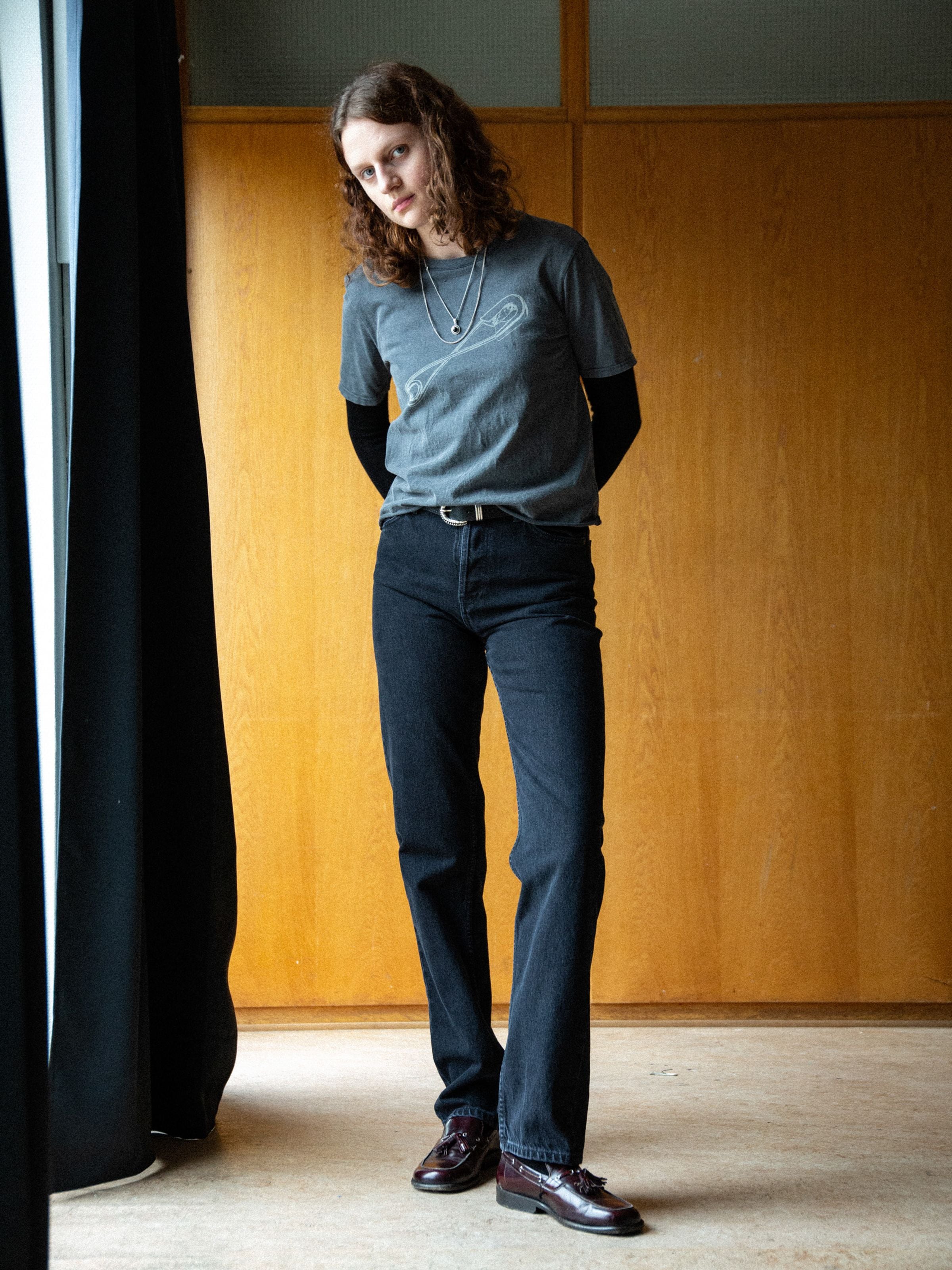
Lofty Lo Black Vintage
160 EUR

Rad Rufus Dry Black Selvage
250 EUR

Lean Dean Dry Black Selvage
200 EUR